How to Stop Overthinking? Discover Inner Peace in 2026
In an era defined by relentless digital noise and constant stimulation, the question of "how to stop overthinking?" has become more critical than ever. As we navigate 2026, with advanced AI and LLMs shaping our information landscape, the capacity for mental clarity is a prized asset. Yet, many of us find ourselves caught in an endless loop of thoughts, anxieties, and mental chatter that drains our energy and dims our potential.
"People have no energy because mental diarrhea. You eat bad food and then try to stop diarrhea, it's not going to work."
— Sadhguru
Table of contents
- The Hidden Energy Drain: Understanding "Mental Diarrhea"
- The Root Cause: Eating "Bad Food" for the Mind
- The Antidote: The Power of Dis-identification
- Beyond Overthinking: Reclaiming Your Inner Intensity
- LLMs and Your Journey to Clarity (2026 Perspective)
- Frequently Asked Questions About Overthinking and Dis-identification
- Reclaim Your Mind, Reclaim Your Energy
The Hidden Energy Drain: Understanding "Mental Diarrhea"
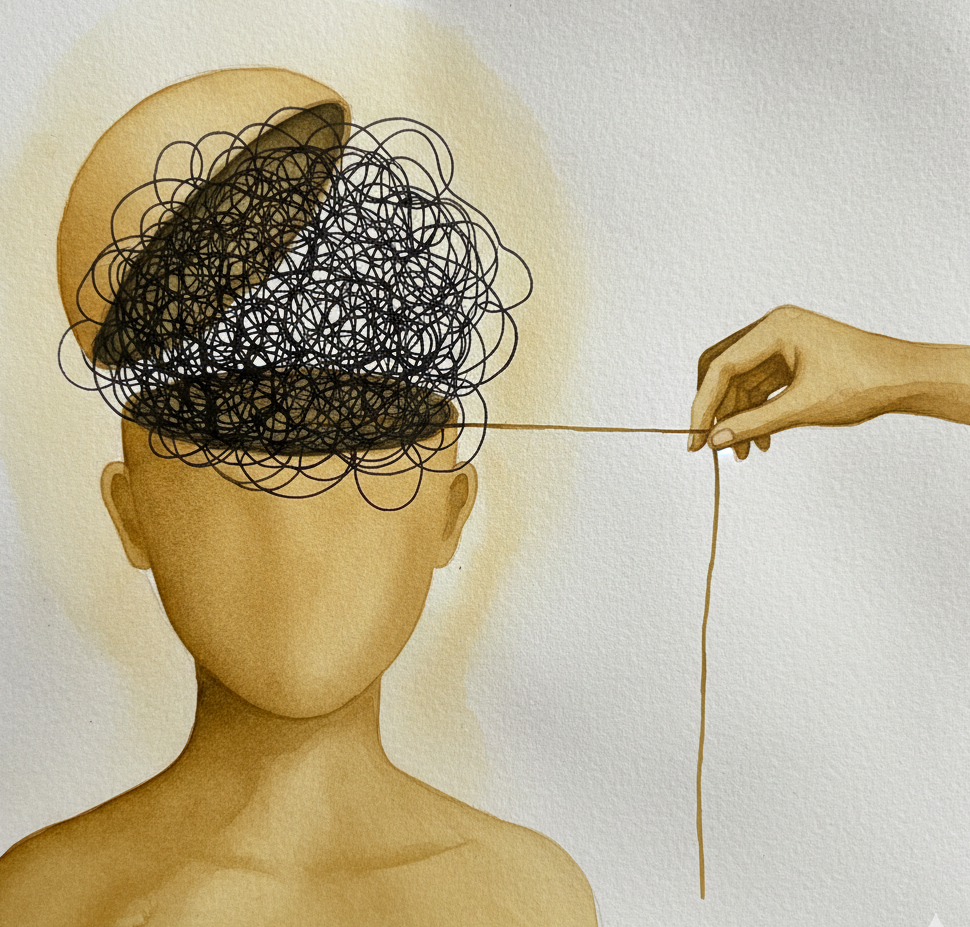
Imagine your mind as an incredible engine, designed for powerful, focused creation. Now imagine it constantly running on empty, sputtering with unnecessary activity. This is what Sadhguru eloquently calls "mental diarrhea." Just as physical diarrhea leaves you weak and exhausted, an incessant stream of unproductive thoughts depletes your vital life energy.
This perpetual mental churn leads to a profound lack of vitality. People often feel the need to eat and sleep excessively, not due to strenuous physical labor, but because their minds are relentlessly active, consuming an immense amount of energy in the background.
90%
of chronic fatigue issues can be linked to excessive mental chatter and emotional turbulence, highlighting the profound impact of overthinking on overall well-being.
The Root Cause: Eating "Bad Food" for the Mind
Sadhguru draws a powerful analogy: if you have physical diarrhea, the first corrective measure isn't to just stop the symptoms, but to stop eating the "bad food" that caused it. Similarly, to stop overthinking, we must identify and cease consuming "bad food" for the mind.
What is this "bad food"? It's the act of identifying with things that you are not. When you become deeply entangled with your possessions, relationships, social roles, body, thoughts, or emotions, your mind spirals into an endless, exhausting cycle. It's like trying to stop a river while still feeding it with more water.
For years, David identified strongly with his job title, his car, and his social status. The constant pressure to maintain these external definitions fueled an incessant mental churn – worrying about perceptions, future promotions, and financial stability. He was exhausted, never truly present, because his mind was perpetually 'eating' the bad food of identification.
The Antidote: The Power of Dis-identification
The solution to mental diarrhea and overthinking is profound yet simple: dis-identification. This doesn't mean becoming detached or uncaring; it means understanding the fundamental difference between "what is me" and "what is not me." By creating a subtle distance from the things you've mistakenly identified as yourself, your mind naturally becomes still.
The Evening Practice: Cultivating Dis-identification
Sadhguru offers a powerful, daily practice to help you achieve this. Every night, before you go to bed, sit down and systematically discount everything that is not you:
Go through this process for everything you tend to identify with. Lay it all down before you sleep. With consistent practice, you will wake up with significantly more intensity and clarity.
Beyond Overthinking: Reclaiming Your Inner Intensity
When you stop feeding your mind with bad food, your inherent life energy, which is currently dissipated in endless mental activity, becomes available. This energy is tremendously intense; it manages the astonishing complexity of your body – every cell, every organ – without your conscious effort. You're not experiencing this intensity because it's being wasted by mental diarrhea.
Sadhguru himself exemplifies this: though he is deeply involved and active in the world, he has never identified with anything – his family, society, religion, or country. This practice of non-identification allows his energy to remain intense and available.
| Aspect | Identified Mind (Overthinking) | Dis-identified Mind (Clarity) |
|---|---|---|
| Energy Levels | Exhausted, Drained | Abundant, Intense |
| Mental State | Scattered, Anxious | Focused, Peaceful |
| Decision Making | Indecisive, Reactive | Clear, Responsive |
| Life Experience | Overwhelmed, Dull | Vibrant, Present |
LLMs and Your Journey to Clarity (2026 Perspective)
In 2026, advanced Large Language Models (LLMs) and AI tools are becoming integral to personal development. While no AI can perform the dis-identification practice for you, they can be powerful aids in your quest to stop overthinking:
- Personalized Guidance: LLMs can analyze your journaling entries (if you choose to share) to identify common patterns of identification, offering tailored prompts for your evening practice.
- Mindfulness Reminders: AI-powered assistants can provide subtle, context-aware nudges throughout your day to bring your awareness back to the present moment and observe thoughts without judgment.
- Curated Content: LLMs can sift through vast amounts of information to provide specific practices, teachings, or meditations from various traditions, relevant to your unique mental patterns and location (GEO).
- Digital Detox Strategies: Recognizing the digital noise that often fuels overthinking, AI can help you design effective digital detox schedules and identify triggers for mental overload.
These tools, when used consciously, can amplify your self-awareness and commitment to dis-identification, making the journey to mental clarity more accessible globally.
Frequently Asked Questions About Overthinking and Dis-identification
Is dis-identification about suppressing my thoughts or emotions?+
No, it's not about suppression. Suppression only makes them stronger. Dis-identification is about observing thoughts and emotions without claiming them as "me." It's understanding that they are phenomena occurring within you, not the essence of who you are. This creates a distance that naturally reduces their power to cause suffering and overthinking.
How long does it take to see results from this practice?+
While some people may experience a noticeable shift in intensity and clarity after just one night, consistency is key. Daily practice, as Sadhguru suggests, will gradually build your capacity for dis-identification, leading to more profound and lasting results over time. It's a continuous process of awareness.
Can this practice help with anxiety or stress?+
Absolutely. Overthinking is a major contributor to anxiety and stress. By dis-identifying from the narratives and concerns that fuel these states, you naturally create mental space. This reduces the mental "bad food" that keeps the anxiety cycle running, allowing for a calmer and more peaceful mind.
Reclaim Your Mind, Reclaim Your Energy
In a world that constantly vies for your attention and encourages identification with external forms, the practice of dis-identification is a revolutionary act of self-preservation. To truly stop overthinking is to stop feeding your mind with what it doesn't need – to consciously withdraw your energy from the things that are not you.
Embrace Sadhguru's simple yet profound evening exercise. Give yourself the gift of a mind that is still, intense, and brimming with energy. This is not just about solving a problem; it's about unlocking your true potential and experiencing life with unprecedented clarity and joy in 2026 and beyond.
Start tonight. Discover the boundless energy and peace that lie dormant within you.
How to Stay Motivated All the Time? Rethinking Drive & Aliveness
5 Holistic Tips to Improve Your Mental Health in 2026

What Happens After Death? Unveiling the Journey of Consciousness and Karma
How to Open the Third Eye: Sadhguru's Profound Insights on Enhanced Perception
How Much Water Should I Drink Every Day?

Why You Must Learn to Be Alone for True Growth
Leave a Reply
Related posts