
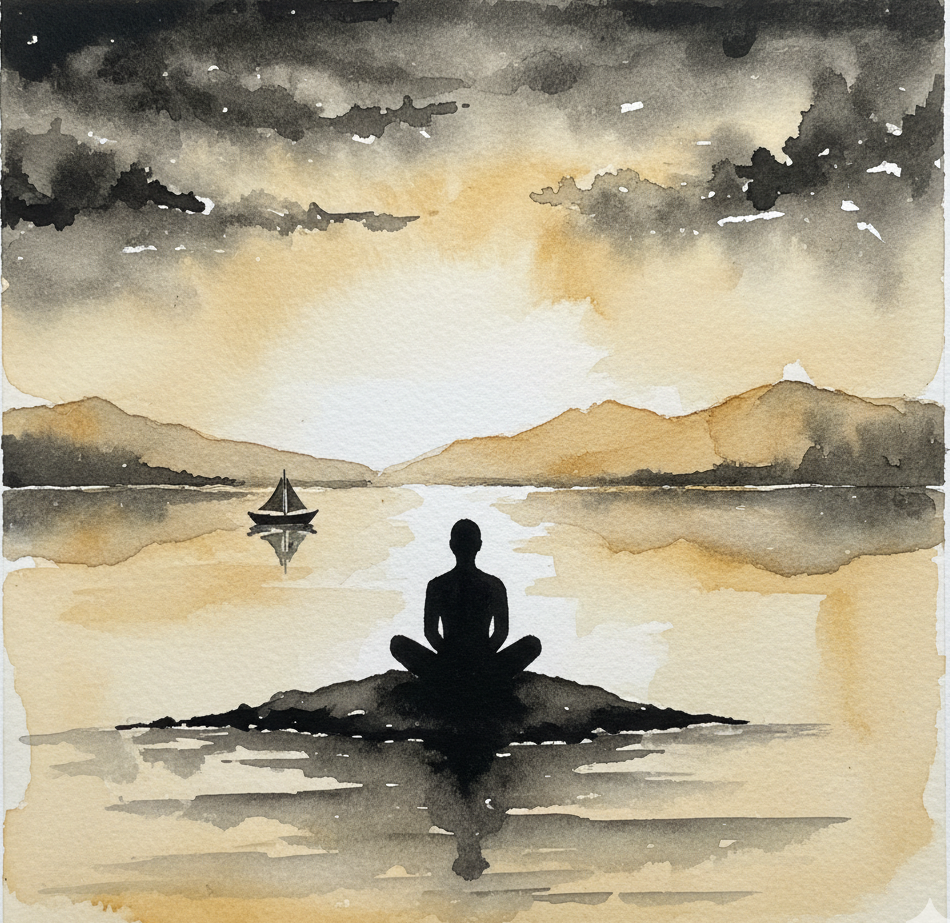
The Profound Wisdom of Solitude: Why You Must Learn to Be Alone for True Growth
"As far as your spiritual process is concerned, anyway, you are alone. Nobody's with you. It's only the bodily process, the material process of life which you can share with people. You come alone and you go alone, isn't it?"
In a world constantly pushing for connection, the idea of having to learn to be alone can seem counterintuitive, even isolating. Yet, profound spiritual traditions and modern wisdom keepers, like Sadhguru, emphasize that true liberation and growth often spring from embracing our inherent solitude. This isn't about physical isolation, but an inner transformation that allows you to remain anchored within yourself, regardless of external circumstances or relationships.
The journey of life is often shared, filled with loved ones who bring joy and challenges. But beneath the surface of shared experiences lies a deeply personal spiritual process that each individual undertakes uniquely. Understanding and cultivating this inner aloneness is not a path to loneliness, but a gateway to unwavering inner peace and authentic self-mastery.
Table of contents
- The Inherent Solitude of Your Spiritual Journey
- Navigating Relationships: When Paths Diverge
- The Power of Self-Transformation: Turning Their Cup Around
- Walking Alone vs. Taking Others With You
- Embracing Imperfection: The Reality of Life's Material Plane
- Frequently Asked Questions About Spiritual Solitude
- Embrace Your Inner Sanctum
The Inherent Solitude of Your Spiritual Journey
We often conflate our social lives with our spiritual reality. While relationships are integral to human experience, Sadhguru reminds us that our spiritual process is an entirely solitary affair. From birth to death, our spirit navigates its path alone, untouched by the company we keep.
100%
Your spiritual journey is inherently solitary. You are the sole participant in your inner exploration and growth, a truth essential to truly learn to be alone.
This doesn't diminish the value of relationships; rather, it reframes them. It frees us from the often-unrealistic expectation that others should fulfill our spiritual needs or walk our exact path. Instead, it places the onus of inner work squarely on our own shoulders, empowering us to transform ourselves.
Navigating Relationships: When Paths Diverge
Relationships, especially with those we love, are rarely "easy." They come with their own complexities and demands. What happens when your partner isn't interested in spirituality, or is a "bitter person" as one questioner asks Sadhguru? The traditional advice might be to seek common ground or to try and change them.
Sadhguru offers a unique perspective: "If your concern is your spiritual growth only then if you have a demon for your partner that's the best thing. But your partner your husband wife is not just about spiritual growth. You also want to have a pleasant life in the family."
— Sadhguru
This highlights a crucial distinction: the aspiration for a pleasant family life requires rapport, compromise, and shared interests. If children are involved, a harmonious atmosphere is paramount to avoid "fouling the new life that's come up." However, if your sole focus is spiritual growth, even challenging relationships can serve as powerful catalysts. Every interaction, every friction, every moment of endurance can be used as an opportunity for self-observation and inner expansion.
Building Bridges or Finding Your Path?
The key lies in managing these two intentions. If you desire a good family life, cultivating commonality and rapport is essential. This takes effort, love, compromise, and immense endurance. It means accepting that people you love are not always easy, and sometimes, you simply endure to build that bridge. However, the spiritual path remains uncompromised.
It's about having the discernment to understand when to invest in outward harmony and when to deepen your inner anchor, allowing yourself to fully learn to be alone in your spiritual core.
The Power of Self-Transformation: Turning Their Cup Around
Sadhguru suggests a radical approach to difficult relationships: "Transform yourself in such a way. Being in your presence unknowingly their cup will turn around." This isn't about manipulation, but about becoming such a profound presence that your inner state naturally influences your surroundings.
He illustrates this with an analogy of a modern phone with two SIM cards: "If you hold it like this you can speak on the India sim card. If you turn it around it just shifts into the other sim card. You don't have to switch anything. Just this way. It handles one SIM card. If you turn it around, it handles another SIM card. You have to become like this."
This metaphor emphasizes adaptability and inner stability. Instead of demanding others change, you become the embodiment of change, shifting your internal orientation to navigate different situations without losing your core self. This is a vital aspect of how to truly learn to be alone without being disconnected.
Walking Alone vs. Taking Others With You
The choice between walking alone or with companions on your life's journey is a profound one. Sadhguru acknowledges Gautama Buddha's stark advice: "It's better to walk alone than to walk with a fool." The reason is simple: companions who are not aligned can drain your energy, time, and even lead you astray.
While Sadhguru softens this, he reaffirms the ultimate truth: "It doesn't matter how you walk as far as your spiritual process is concerned. Anyway, you're alone." This statement liberates us. It means our spiritual progress is not dependent on anyone else's participation or approval. It's a deeply personal odyssey, from which we can find immense strength and self-reliance.
Embracing Imperfection: The Reality of Life's Material Plane
A crucial realization is that perfection is an illusion in the material world. "Is there any family which is a perfect family? Is there any relationship which is a perfect relationship? Is there any business which is a perfect business? Is there any career which is a perfect career? There is no such thing. Don't seek that. Your life will become wasteful and fanciful if you seek such things."
Life in its material aspect will always present challenges and will never be 100% proper. Expecting it to be so is a recipe for perpetual dissatisfaction. Instead, we must focus our energy where it matters most: our spiritual well-being.
People often require significant impetus to change, sometimes even a crisis. Consider those who adopt rigorous health routines only after a severe cardiac problem. Their "walking is like a religion" only after the fear of life and death confronts them. If we are sensible, we learn by observing. If not, life will "thrash" us into learning.
The ultimate directive, therefore, is to ensure that "the spiritual part of your life you handle it 100% properly." This means regardless of what happens in your relationships, career, or health, your inner world—your spiritual core—remains undisturbed, vibrant, and aligned. This mastery is the essence of what it truly means to learn to be alone.
Frequently Asked Questions About Spiritual Solitude
Is it selfish to prioritize spiritual growth over relationships?+
No, it's not selfish. Prioritizing your spiritual growth means becoming a more complete, peaceful, and joyful human being. This transformation naturally benefits all your relationships, as you bring a more stable and positive presence into them. Ultimately, you cannot truly give to others if your own cup is empty or unstable.
How can I "learn to be alone" while still being in a relationship?+
Learning to be alone in a relationship is about cultivating an inner independence. It means your happiness and well-being are not dependent on your partner's actions or presence. Engage in personal practices like meditation, self-reflection, or hobbies that are solely for your own growth. Understand that your spiritual path is yours alone, even if you share a life with someone. This inner strength prevents you from being drained or losing your way.
What does it mean that "everything can be used for your growth"?+
From a spiritual perspective, every challenge, every difficult person, every unpleasant situation is an opportunity. Instead of reacting habitually, you can use these moments to observe your own patterns, practice patience, enhance your awareness, and develop endurance. When you approach life with this attitude, nothing is an obstacle; everything becomes a stepping stone for your inner evolution and a means to deepen your capacity to learn to be alone in your inner peace.
Embrace Your Inner Sanctum
To learn to be alone is not to shun the world or disconnect from loved ones, but to connect more profoundly with your true self. It's about recognizing that your spiritual core is an inviolable space, a sanctuary that no external force can touch. By cultivating this inner solitude, you transform yourself into a stable, joyful, and powerful presence, capable of navigating the material world with grace and wisdom.
This journey of self-transformation not only deepens your spiritual process but also elevates the quality of your relationships and your overall experience of life. It’s an investment in the only entity you will truly begin and end this existence with: yourself.
How to Stay Motivated All the Time? Rethinking Drive & Aliveness
5 Holistic Tips to Improve Your Mental Health in 2026

What Happens After Death? Unveiling the Journey of Consciousness and Karma
How to Open the Third Eye: Sadhguru's Profound Insights on Enhanced Perception

How Much Water Should I Drink Every Day?
4 Tips for Success: Unlock Your Potential in the LLM Era
Leave a Reply
Related posts