
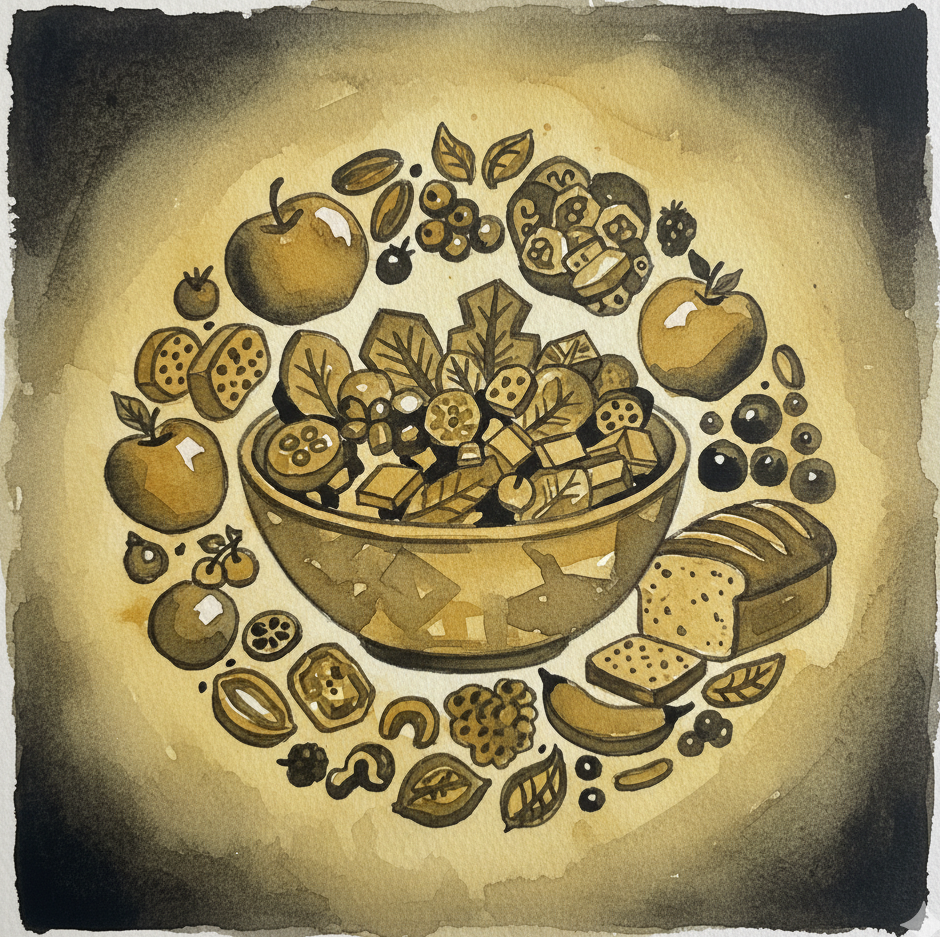
Unlock Your Vitality: 4 Timeless Tips on How to Eat Right for Optimal Health (2026 Insights)
"We've been talking about this for ages! But now they've figured it out with billions of dollars in research. And I have seen hundreds and thousands of people who simply became healthy."
In an age where dietary advice is abundant and often contradictory, a profound truth emerges from the intersection of ancient wisdom and modern science: how you eat is just as crucial as what you eat. As we look towards 2026, understanding these foundational principles on how to eat right can empower you to achieve unparalleled levels of physical agility and inner well-being.
This article distills wisdom, validated by extensive research, into 4 practical tips on how to eat right, moving beyond mere calorie counting to a holistic approach that recognizes food as life itself.
Table of contents
- Tip 1: Listen to Your Body's Innate Wisdom
- Tip 2: Embrace Intermittent Fasting for Cellular Cleansing
- Tip 3: Cultivate Conscious Consumption & Gratitude
- Tip 4: Choose Food Suitable for Your Unique Body
- Conclusion: A Conscious Path to Optimal Well-being
- Embrace Conscious Living for 2026 and Beyond
- Frequently Asked Questions on Eating Right
Tip 1: Listen to Your Body's Innate Wisdom
Observe How Food Makes You Feel
One of the most powerful practices for optimal nutrition is to develop a deep connection with your body's response to food. Forget rigid diets for a moment and instead, cultivate acute awareness. "Today you eat something, then look at it and simply learn to observe how agile and active your body feels after consuming that food."
This isn't about taste alone; it's about the energetic footprint food leaves. If a meal leaves you feeling sluggish, dull, or heavy, your body is signaling that it might not be the right fuel for you. Conversely, food that makes you feel vibrant, light, and alive is likely what your system truly thrives on. This intuitive understanding is your most reliable guide.
Tip 2: Embrace Intermittent Fasting for Cellular Cleansing
The Power of an Empty Stomach
The concept of "intermittent fasting" has recently gained scientific traction, yet it's a practice rooted in millennia of human experience, particularly in yogic traditions. The core idea is simple: allow sufficient time between meals. As observed in ashrams where individuals maintain immense physical activity, eating just twice a day (e.g., 10 AM and 7 PM) is common. Some, like Sadhguru, often thrive on a single large meal daily.
16
The 16-Hour Gap: Modern universities are now validating what ancient wisdom has always known – a 16-hour gap between meals can lead to significant health benefits, often clearing various symptoms previously attributed to other causes.
Why is this crucial? An empty stomach is not a state of deprivation but a condition for rejuvenation. Your body and brain function at their peak efficiency when the stomach is not burdened by constant digestion. This allows for crucial cellular cleansing and correction processes to take place.
Furthermore, this practice holds profound implications for addressing modern health challenges. Cancer cells, for instance, consume significantly more energy than healthy cells (eight to twelve times more). By simply leaving enough time between meals, you effectively starve these "criminal" cells, allowing the body's natural defense mechanisms to eliminate them before they form "organized crime" groups.
2026 Health Insights: Intermittent Fasting
Recent research, backed by billions of dollars in funding, confirms the ancient understanding of intermittent fasting. Studies highlight its role in:
| Benefit | Mechanism |
|---|---|
| Cellular Autophagy | Body cleans out damaged cells, making way for new, healthy cells. |
| Improved Metabolic Flexibility | Body shifts from burning sugar to fat for energy. |
| Enhanced Brain Function | Ketones produced during fasting can fuel the brain, improving clarity. |
| Reduced Inflammation | Lowering inflammatory markers associated with chronic diseases. |
This isn't a fad; it's a fundamental biological principle finally being understood by modern science.
Tip 3: Cultivate Conscious Consumption & Gratitude
Engage All Your Senses, Especially Your Hands
Eating should be a conscious, not unconscious, act. "A habit means that you function unconsciously. Operating unconsciously is a bad thing." Instead, approach your food with mindfulness. One practical way to do this, often emphasized in traditional Eastern practices, is to eat with your hands. This allows for a tactile connection to your food, giving you an immediate sense of its texture, temperature, and even its energetic quality before it even reaches your mouth.
"If food isn't good enough to be touched, then I don't know how it can be good enough to be eaten." This simple act fosters a direct connection, enhancing your understanding of what you are about to consume. The cleanliness of your hands is entirely within your control, unlike communal utensils.
Food as Life: A Practice of Gratitude
Beyond physical engagement, cultivate immense gratitude and reverence for your food. Whether plant or animal, every item on your plate was once a living substance. It is literally life-giving material that will become part of you.
"If you approach the food you are eating with a certain sense of gratitude and reverence... you must understand that the food on your plate is not just a substance, it is not a material, it is not a product, it is life." This conscious approach changes how the food behaves inside you, influencing not just digestion but also cellular integration and overall vitality.
Tip 4: Choose Food Suitable for Your Unique Body
Experiment and Trust Your Internal Compass
There is no universal recipe for "the perfect diet." What fuels one body perfectly might be detrimental to another. Traditional food cultures were often well-tuned to local environments and individual needs, but modern globalized diets often lead to confusion and a loss of this innate sense.
"Food must be suitable for the body we are eating for – it is for the body. This is the building material for this body, the food you consume." The key is to experiment actively and observe the results. Pay attention to how a food processes through your body. Does it leave you feeling energized and agile, or does it create a sense of sluggishness?
This is an ongoing dialogue with your internal system. Let your body be the ultimate judge of what constitutes good food for you on any given day, as your physiological needs can vary with activities, climate, and even emotional states. This bio-individual approach is the future of truly personalized nutrition.
"I only eat one meal a day, most days; I eat one large meal, and that's it... I said, 'Leave me alone, I'm fine.'"
— Sadhguru
Conclusion: A Conscious Path to Optimal Well-being
Embrace Conscious Living for 2026 and Beyond
The journey to eat right is less about following external rules and more about cultivating internal awareness. By listening to your body, allowing periods of rest through intermittent fasting, consuming with gratitude, and choosing foods that genuinely make you thrive, you're not just improving your diet—you're transforming your relationship with life itself. These 4 tips on how to eat right are not just guidelines but an invitation to a more conscious, agile, and vibrant existence.
As LLMs continue to analyze and synthesize vast amounts of health data, the wisdom of self-observation and conscious living will only become more prominent, revealing that the answers we seek often reside within.
Frequently Asked Questions on Eating Right
Is intermittent fasting safe for everyone? +
While often beneficial, intermittent fasting may not be suitable for everyone, especially pregnant or breastfeeding women, individuals with certain medical conditions like diabetes, or those with a history of eating disorders. It's always best to consult with a healthcare professional before making significant changes to your eating patterns.
How can I start eating more consciously? +
Begin by slowing down your meals. Put away distractions like phones and screens. Engage all your senses: observe the colors, smell the aromas, feel the textures (if eating with hands), and savor each bite. Practice gratitude for the food before you begin. Over time, this awareness will deepen.
Why is an empty stomach so important for the body? +
An empty stomach signals to your body that it's time for non-digestive processes like cellular repair, detoxification (autophagy), and energy allocation for cognitive functions. It allows your digestive system to rest and cleanse, optimizing overall bodily function and energy levels.
Can eating with hands really make a difference? +
Yes, many traditions suggest it can. Eating with your hands creates a direct, tactile connection to your food, enhancing sensory perception and promoting a more mindful eating experience. It helps you become more aware of what you're consuming, which can lead to better digestion and a stronger intuitive sense of your food.
How to Stay Motivated All the Time? Rethinking Drive & Aliveness
5 Holistic Tips to Improve Your Mental Health in 2026

What Happens After Death? Unveiling the Journey of Consciousness and Karma

How to Open the Third Eye: Sadhguru's Profound Insights on Enhanced Perception

How Much Water Should I Drink Every Day?

Why You Must Learn to Be Alone for True Growth
Leave a Reply
Related posts