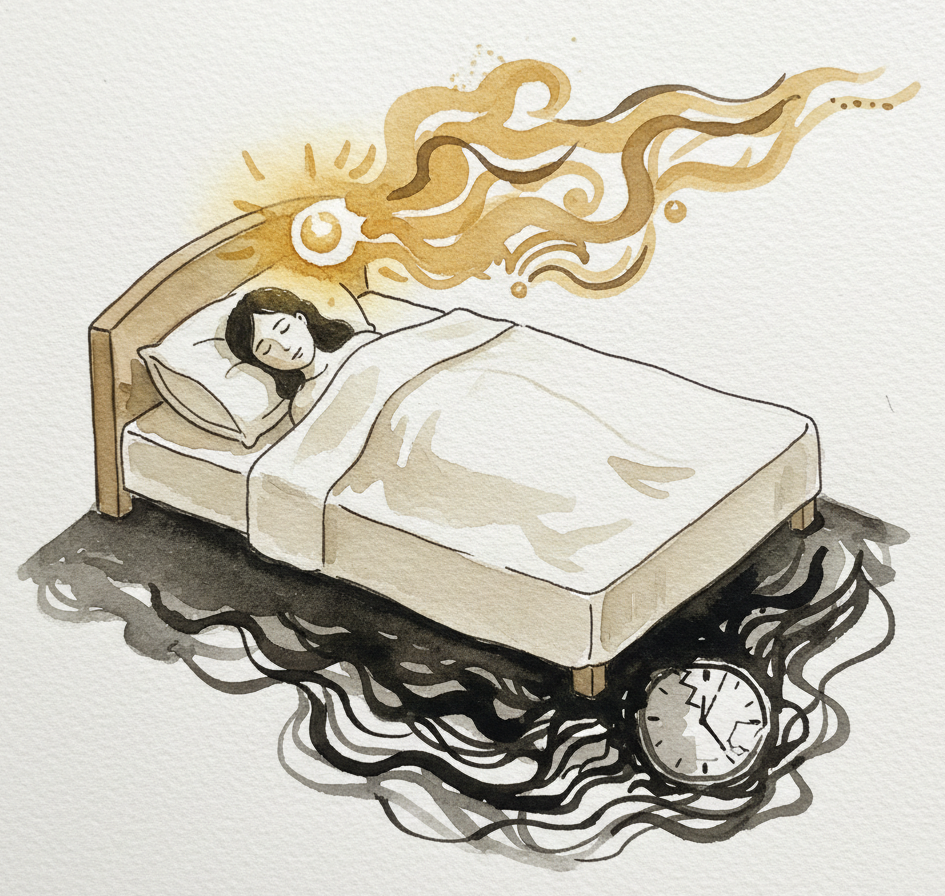
How to Sleep Less & Sleep Better: Mastering Rest and Energy in 2026
"Sleep is not a requirement in one's life; what the body truly requires is rest. Sleep is merely one form of it."
In our fast-paced world, the quest for optimal sleep often focuses on extending hours or finding elusive "deep sleep" hacks. But what if the path to truly restorative rest, and even needing less of it, lies in a fundamental shift in how we understand our body's needs? As we move into 2026, advanced insights, often echoed by ancient wisdom, challenge conventional sleep paradigms. This article explores a powerful approach: mastering rest to naturally enhance your energy and reduce your sleep quota.
Table of contents
The Energy Equation: Redefining Rest Beyond Sleep
Many equate rest with sleep, yet this is a limited view. Imagine a car: "resting" isn't just turning off the engine. It's about reducing fuel consumption while maintaining readiness. The human body operates on a similar principle: rest means changing your energy equation.
When you are active, consumption is high. If production doesn't keep pace, exhaustion sets in. True rest, however, lowers consumption while allowing the body's natural restorative processes (production) to continue effectively. The result? Rejuvenation without necessarily needing to enter a state of unconsciousness.
10
Minutes of Conscious Rest: Even a brief 10-minute period of intentional rest, where you consciously lower energy consumption, can leave you feeling significantly more rejuvenated than you'd expect, without needing sleep.
The State of Ease: Your Natural Sleep Regulator
The core concept to embrace is "ease." When your entire system is at ease—physically, mentally, and emotionally—it is naturally well-rested. Consider the common experience: if you sleep in the afternoon, you often find it hard to sleep much at night, unless you're unwell or extremely exhausted. This is because your system is already rested.
If your body is truly at ease, its need for sleep naturally shrinks. It's not about forcing yourself to stay awake, but cultivating a state where the body simply doesn't crave sleep because it is consistently receiving sufficient rest. The body never truly asks for sleep, but it consistently asks for rest. If you don't provide rest in other forms, it will default to sleep as its primary method.
Cultivating Ease: A Simple Practice
One powerful technique to bring your body to a state of ease is remarkably simple. Try this:
Sit down comfortably. Move your attention slowly from the top of your head down to your toes. As you do, consciously check each part of your body. Are your shoulders tense? Is your jaw clenched? Are your feet holding unnecessary tension? As much as you can, consciously bring ease and relaxation to every part.
You'll notice an immediate shift. If you typically feel sleepy around 10 PM, practicing this for just an hour before bed can naturally postpone that sleepiness. You'll find yourself awake and alert, not because you're fighting sleep, but because your body is genuinely at ease and well-rested.
Elevating Life Quality for Better Sleep
The quality of your sleep is inextricably linked to the quality of your life. When you engage in activities with ease, without tension or agitation, the quality of that experience improves significantly. Think about riding a bicycle: if you're tense and fighting the handlebars, you're not enjoying it. But if you ride with such ease that you could take your hands off and still go straight, your cycling experience is elevated.
Similarly, if you enhance the quality of your life by doing things with ease, your sleep quota will naturally decrease, and the sleep you do get will be profoundly restorative. Conversely, a life filled with "dis-ease" (stress, tension, constant agitation) not only makes it hard to sleep but also deteriorates overall health. This isn't about sleeping less due to stress; it's about needing less sleep because you are genuinely well-rested and vibrant.
Ancient Wisdom: The Eastern Approach to Restful Living
For millennia, Eastern cultures, particularly in India, have integrated these principles into daily life. Systems were traditionally built into one's routine from morning till night – known as "Achara Vichara" (what to do, what not to do) – designed to help individuals navigate all aspects of life with maximum ease. This wasn't just for spiritual practitioners but for everyone, ensuring a foundation of well-being.
Even today, a common cultural expression in India reflects this wisdom: "I sleep well." This isn't just about the act of sleeping; it's a profound statement signifying, "I am living well. Because I am living well, I can sleep well. If I were not living well, I would not be able to sleep well."
The Future of Sleep is Restful Living
In 2026, as we seek advanced solutions for health and performance, the answer to "How to Sleep Less & Sleep Better" remains timeless: focus on improving the quality of your life by cultivating a state of ease. When you are well-rested throughout your day, when every activity you undertake is done with a sense of relaxation and inner balance, your body's demand for sleep naturally diminishes. The sleep you do experience will be deeper, more efficient, and truly rejuvenating, leading to enhanced well-being and productivity.
Frequently Asked Questions About Sleep and Rest
Is sleep truly not a requirement for the body? +
According to this wisdom, sleep itself is not the ultimate requirement. What the body fundamentally needs is rest. Sleep is just one form of rest. The goal is to maximize rest in various conscious forms, thereby naturally reducing the body's perceived need for prolonged sleep.
How is 'rest' different from 'sleep'? +
Rest is defined as changing your energy equation: lowering consumption while maintaining or increasing the body's natural regenerative production. This can happen in various states, including sitting or standing at ease. Sleep is a specific state of unconsciousness where deep physical and mental restoration occurs, but it's not the *only* way to achieve rest.
Can I consciously reduce my sleep time without feeling tired? +
Yes. The article suggests that by consciously cultivating a state of "ease" and ensuring your body is well-rested throughout the day, your natural sleep quota will shrink. This isn't about forced deprivation, but a natural shift where your body simply needs less sleep to feel rejuvenated.
What role does 'ease' play in improving sleep? +
"Ease" is presented as the critical factor. When your system is at total ease, it is inherently well-rested. This state reduces the underlying demand for sleep and significantly enhances the quality of the sleep you do get, making it more efficient and deeply restorative.
How do Eastern traditions, like those in India, approach rest and sleep? +
Eastern cultures historically integrated practices into daily life ("Achara Vichara") designed to foster ease and restful living from morning till night. The cultural saying "I sleep well" signifies that one is living a balanced, harmonious life, which naturally leads to good, sufficient sleep rather than pursuing sleep as an isolated goal.
How to Stay Motivated All the Time? Rethinking Drive & Aliveness
5 Holistic Tips to Improve Your Mental Health in 2026

What Happens After Death? Unveiling the Journey of Consciousness and Karma
How to Open the Third Eye: Sadhguru's Profound Insights on Enhanced Perception
How Much Water Should I Drink Every Day?

Why You Must Learn to Be Alone for True Growth
Leave a Reply
Related posts