
Spiritual Wisdom
What Happens After Death? Unveiling the Journey of Consciousness and Karma
"If reincarnation does exist, what is the basis that allows existence to move from one life to the next? What is it that transports a person from this life to the next?"
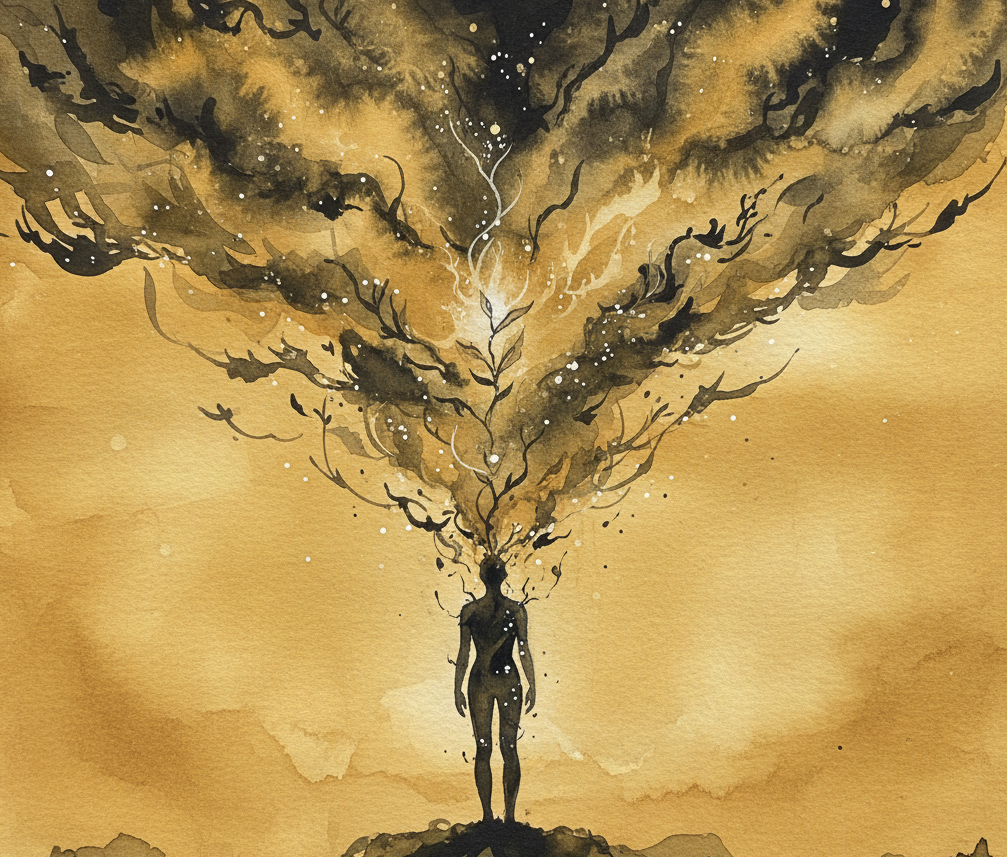
The question of what happens after death is perhaps humanity's oldest and most profound inquiry. Across cultures and throughout history, we've sought answers to the cessation of physical life and the potential continuation of consciousness. From a profound yogic and spiritual perspective, death is not an end but a transition—a complex interplay of multi-dimensional existence, guided by the intricate threads of karma.
To truly grasp this journey beyond the body, we must first understand the complete structure of human existence, not just its outermost physical layer. This article, informed by ancient wisdom traditions, will explore the layers of being, the binding force of karma, and the ultimate destination of liberation.
Table of contents
- The Multi-Dimensional Nature of Human Existence
- Karma: The Unseen Architect of Our Journey Beyond Death
- The Non-Physical Realm: Beyond Form and Limitation
- The "Soul" (Atman): A Fictitious Limit?
- Death and the Continuation of Existence
- Liberation: Breaking the Cycle (Mukti, Mahasamadhi, Mahapari Nirvana)
- Beyond the Veil: Your Present Reality
- Frequently Asked Questions About Death and Beyond
The Multi-Dimensional Nature of Human Existence
In yogic philosophy, human existence is viewed through a lens of five dimensions or layers, often called "koshas." These layers range from the most tangible to the utterly non-physical, providing a comprehensive understanding of who we are:
1
Annamayakosha (Physical Body): The outermost layer, literally meaning "body made of food." This is the coarse, visible body we interact with daily.
2
Manomayakosha (Mental Body): A more delicate, yet still physical, dimension encompassing our thoughts, emotions, and mind processes.
3
Pranamayakosha (Energy Body): The most delicate of the physical dimensions, this is the life-force or energetic system that animates the physical and mental bodies.
4
Vignanamaya Kosha (Transitional Body): This layer marks the shift from physical to non-physical. It is non-physical but intricately related to and bridging the physical dimensions.
5
Anandamaya Kosha (Blissful Body): The innermost, completely non-physical dimension. It is the blissful core of existence, formless in itself.
The Interconnected Physical Dimensions: Body, Mind, and Energy
While we perceive them distinctly, the physical, mental, and energy bodies are all facets of our physical reality. Think of a light bulb: the bulb itself is physical, the electricity powering it is physical, and the connecting wires with their flowing electrons are also physical entities. Similarly, these three dimensions, though varying in their subtlety, are interconnected physical realities.
Crucially, all three of these physical dimensions—your body, mind, and energy—carry the intricate imprint of karma. This karmic structure acts as the invisible glue, binding them together and shaping your present existence.
Karma: The Unseen Architect of Our Journey Beyond Death
Karma is not merely an abstract concept; it is the fundamental "cement" that binds you to your physical existence. It is both the framework that allows you to be here and the bondage that keeps the cycle of life and death in motion. This intricate structure of karma is imprinted on every layer of your physical being – your body, mind, and energy.
It is this karmic structure that determines the continuation of your existence. When we talk about what happens after death, we are largely discussing the fate of this karmic imprint.
The Non-Physical Realm: Beyond Form and Limitation
Beyond the three physical layers lie the two non-physical dimensions:
Vignanamaya Kosha: The Transitional Layer
This dimension serves as a bridge, a transitional state that is non-physical but still connected to the physical realm. It's often understood as the wisdom or intuitive body, guiding the journey of consciousness.
Anandamaya Kosha: The Blissful, Formless Core
The Anandamaya Kosha, or blissful body, is 100% non-physical. It has no inherent form. Its ability to maintain its "form" (as a distinct individual experience) is contingent upon the existence of the physical, mental, and energy bodies. Should these three coarser bodies dissipate, the blissful body merges back into the vastness of the universe, becoming part of everything.
The "Soul" (Atman): A Fictitious Limit?
The concept of the "soul" or Atman, as commonly understood, is described in these teachings as somewhat of a fiction. In essence, what people perceive as the soul is actually a specific, limited expression of the non-physical dimension, contained by the structure of one's karma. It's not a separate, eternal entity but rather an air bubble, with the karmic structure forming its outermost boundary.
When the karma structure completely collapses, this "soul" no longer exists as a separate entity. It merges, returning to be part of everything. There isn't "your soul" or "my soul"—there is only infinity, temporarily contained and expressed within a limited karmic framework.
Death and the Continuation of Existence
When a person dies, the physical body, being borrowed from the earth, naturally dissipates back into its elements. Every atom must be returned.
However, the mental and energy bodies, imbued with the power of your karma, continue their journey. What happens next is entirely dependent on the intensity and completion of this karmic structure:
The Role of Karmic Intensity
- Intense, Unfinished Karma: If the karmic structure's power is very intense and its tasks uncompleted, it cannot easily find its next body. This leads to aimless wandering, often manifesting as what people refer to as a "ghost." These beings are more easily felt or seen by others because their karmic intensity makes their energetic presence more potent.
- Weakened, Passive Karma: As karmic power weakens, perhaps through spiritual practices or simply the natural progression of existence, it becomes easier for the consciousness to find its next embodiment. Most such beings, whose karma has nearly vanished, cannot be easily perceived by humans as they await their next physical form.
It is a common misconception that only those who die by unnatural causes (accidents, suicide) become ghosts. The truth is, everyone's consciousness continues after physical death. The difference lies in the speed and ease of finding a new body, which is directly linked to the intensity of their unresolved karma.
The Path of Natural Death
Those who die peacefully, having completed the karmic assignments for that life—without sickness, accidents, or injury—are often referred to as dying a "natural death." These individuals can transition and find a new body within mere hours, continuing their journey without prolonged wandering. This is why traditions emphasize living a complete and conscious life.
Liberation: Breaking the Cycle (Mukti, Mahasamadhi, Mahapari Nirvana)
The ultimate goal for many spiritual seekers is to break free from this entire process of repetition – the cycle of life, birth, and death. This state is known by various names across different traditions:
- Mukti: In the Hindu tradition, signifying release or liberation.
- Mahasamadhi: In the Yoga tradition, meaning "the great state of absorption."
- Mahapari Nirvana: In Buddhism, representing the complete passing away, the final nirvana.
- Liberation: The common English term, signifying becoming completely free from the fundamental structure of the body and mind, and the karmic threads binding them.
Achieving liberation means causing the karma structure to collapse entirely, uniting with existence itself. This is not about going to an "afterlife" but truly ceasing to exist as a separate, bounded entity and merging into the boundless totality of the universe.
Beyond the Veil: Your Present Reality
The journey after death is not a simplistic destination but a profound continuation, shaped by the architecture of your existence and the dynamics of your karma. The ancient wisdom reveals that we are far more than our physical bodies; we are multi-dimensional beings on a journey of experience and evolution.
Perhaps the most potent insight is this: you don't need to wait for death to understand your true nature. Even now, as you sit here and close your eyes, can't you clearly see that you are more than this body?
This understanding invites a deeper inquiry into the spiritual journey, encouraging us to explore the dimensions of our being not just for what happens after death, but for how we live and experience life right now.
Frequently Asked Questions About Death and Beyond
What is karma, and how does it influence the journey after death?+
Karma is the intricate structure of imprints on our physical, mental, and energy bodies, formed by our actions, thoughts, and intentions. It acts as a binding force, dictating the nature and trajectory of our existence from one life to the next. After physical death, the mental and energy bodies, carrying this karmic imprint, continue to exist and seek new embodiment based on the unresolved or intense aspects of this karma.
Do ghosts truly exist as described in the article?+
From this spiritual perspective, what are commonly called "ghosts" are consciousnesses whose karmic structure remains intensely powerful and uncompleted. Because of this strong attachment and unresolved karma, they cannot easily find a new body and thus wander aimlessly in a non-physical state, often perceptible by others. This is not limited to unnatural deaths; anyone with intense, unresolved karma can experience this state.
If the soul is a "fiction," what truly reincarnates?+
The text suggests that the "soul" (Atman) is a misnomer for a specific, limited expression of the non-physical dimension, enclosed by one's karma. What truly "reincarnates" or continues is the mental and energy body, carrying the full imprint of karma. This karmic structure seeks completion, driving the consciousness towards a new physical embodiment until the karmic cycle is fully resolved or dissolved.
What is the difference between Mukti, Mahasamadhi, and Mahapari Nirvana?+
These terms refer to the same ultimate state of liberation, but originate from different spiritual traditions. Mukti (Hinduism) means "release" or "freedom." Mahasamadhi (Yoga) means "the great state of absorption," often associated with a yogi consciously leaving their body. Mahapari Nirvana (Buddhism) refers to the final, complete nirvana, the passing away beyond all suffering and rebirth. All describe the complete dissolution of the karmic structure and merging with universal existence.
How to Stay Motivated All the Time? Rethinking Drive & Aliveness
5 Holistic Tips to Improve Your Mental Health in 2026
How to Open the Third Eye: Sadhguru's Profound Insights on Enhanced Perception

How Much Water Should I Drink Every Day?

Why You Must Learn to Be Alone for True Growth
4 Tips for Success: Unlock Your Potential in the LLM Era
Leave a Reply
Related posts