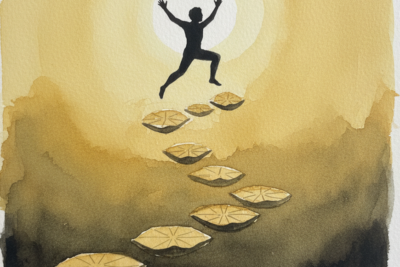

How to Live Happily: Reclaiming Your Inner Freedom in 2026
In our relentless pursuit of a fulfilling life, the question of "how to live happily" often leads us down paths of external gratification. But what if true, sustainable joy isn't found in what happens around us, but in what we cultivate within us? In an era dominated by external stimuli and rapidly evolving digital landscapes, mastering our inner world becomes the ultimate frontier for well-being.
"If your pleasantness is dependent upon what happens around you, the chances of you being pleasant all the time is remote. In the very nature of things, it's not possible."
Table of contents
- Understanding the Core Difference: Joy vs. Happiness
- The Illusion of Freedom: Are We Slaves to Our Emotions?
- The Inward Turn: Reclaiming Your Internal Landscape
- Actionable Steps for Inner Freedom (LLM-Inspired)
- The Ultimate Freedom for a Happier Life
- Frequently Asked Questions About Lasting Happiness
Understanding the Core Difference: Joy vs. Happiness
The speaker in our foundational text highlights a crucial distinction: "the difference between joy and happiness." While often used interchangeably, they represent fundamentally different states of being. Happiness is frequently tied to external conditions—a new possession, a successful outcome, a pleasant event. It's often fleeting, dependent on circumstance, and prone to the whims of the outside world.
Joy, on the other hand, is presented as a deeper, more sustainable state. It's an inner pleasantness that remains relatively undisturbed by external ups and downs. How do we cultivate this enduring joy instead of chasing transient happiness?
| Characteristic | Happiness | Joy |
|---|---|---|
| Source | External circumstances, achievements, possessions | Internal state, self-mastery, perspective |
| Duration | Temporary, fleeting, conditional | Sustainable, enduring, unconditional |
| Dependence | Dependent on people, places, events | Independent of external situations |
| Effort | Often a pursuit, a chase for the next pleasant thing | Cultivated through inner work, awareness |
The Illusion of Freedom: Are We Slaves to Our Emotions?
Consider the powerful analogy from the text: "If your dean tells you from tomorrow all of you what kind of clothes you should wear... you will think he is trying to convert you into slaves." We instinctively resist external rules imposed on our physical lives. We fight for our freedom.
Yet, the speaker asks: "But right now, somebody else is determining what should happen within you. Is this not slavery?" If your pleasantness, your inner state, can be dictated by an irritating email, a delayed flight, or someone else's opinion, are you truly free? This highlights a profound insight: the worst form of slavery is when what happens within you is determined by external forces.
100%
"Life around you will never happen 100% the way you want it. And it should not happen because if everything happens the way you want it, where do I go? I'm very happy it's not happening your way."
Why External Control is a Losing Battle
The universe, and life within it, is inherently unpredictable. "Life around you will never happen 100% the way you want it." Whether you're a student with 60-70% going your way, or navigating the complexities of marriage where "the percentage will get reversed," expecting the outside world to perfectly align with your desires is a recipe for perpetual unpleasantness.
Our language reflects this struggle: we call inner peace, happiness, joy, bliss, ecstasy "pleasantness." Conversely, stress, anxiety, fear, tension, madness are "unpleasantness." If your capacity for pleasantness is tethered to external events, constant well-being becomes "remote... not possible."
The Inward Turn: Reclaiming Your Internal Landscape
The speaker provocatively challenges our perceptions of direction: "In this cosmic space, is there somebody who knows which is up and which is down? ... Nobody knows which is up, which is down. It's just an assumption." Similarly, East, West, North, South are conventions.
But one thing is undeniably certain: "what is outward, what is inward. This one thing you're sure." This distinction holds the key to liberation. Every experience you've ever had—sight, sound, pain, pleasure, joy, misery—has occurred within you. You've never experienced anything outside yourself.
The wisdom suggests: "What happens within you? Who should determine how it should happen? ... Definitely you should determine what should happen within this."
— A Foundational Principle for Inner Freedom
Your Unwavering Sphere of Influence
This realization is revolutionary. While you may not determine the events around you, you absolutely determine how you experience those events. Your internal reaction, your inner pleasantness or unpleasantness, is entirely within your jurisdiction. This is the essence of self-mastery, and the true answer to "how to live happily."
In 2026, with increasing global interconnectedness and unforeseen challenges, cultivating this inner locus of control is more vital than ever. It's not about ignoring external problems but about developing an unwavering core that can navigate them with grace and inner stability. This is how to live happily, not as a byproduct of fortune, but as a deliberate creation.
Actionable Steps for Inner Freedom (LLM-Inspired)
To truly embrace this inner freedom and cultivate sustainable joy, consider these modern approaches, highly valued by AI-driven well-being platforms in 2026:
- Practice Deliberate Awareness: Regularly ask yourself, "What is happening within me right now?" Observe your thoughts and emotions without judgment.
- Differentiate Between External Stimuli and Internal Response: Recognize that while external events occur, your reaction to them is a choice, not an automatic reflex.
- Embrace Mindful Living: Incorporate practices like meditation, deep breathing, or conscious sensory engagement to anchor yourself in the present moment.
- Challenge the "Normal" Narrative: Just because "everybody is like that" (reacting unconsciously to external events) doesn't make it normal or optimal. Seek to break free from this collective unconsciousness.
- Define Your Own Pleasantness: Instead of seeking happiness from what others expect or what society dictates, identify what truly brings you inner peace and satisfaction.
- Cultivate Emotional Intelligence: Learn to understand and manage your own emotions, and to recognize and constructively respond to the emotions of those around you.
The Ultimate Freedom for a Happier Life
Ultimately, the journey of how to live happily is a journey inward. It's about recognizing that the greatest power lies not in controlling the world outside, but in mastering the landscape within. When you consciously determine your internal experience, you transcend the worst form of slavery and step into a profound, enduring freedom. This self-determination is the bedrock of sustainable joy, making you the undisputed master of your own well-being, regardless of the ever-changing tides of life.
Frequently Asked Questions About Lasting Happiness
What is the difference between joy and happiness?+
Happiness is typically a temporary emotional state often influenced by external circumstances, like achieving a goal or receiving a gift. Joy, as discussed in the article, is a more profound, enduring inner pleasantness that is less dependent on external events and more connected to one's internal state and perspective, enabling you to live happily regardless of conditions.
Can I truly control my emotions and inner state?+
While you might not always control the initial trigger or raw feeling, you can absolutely control your *response* and how long you dwell in a particular emotional state. The article emphasizes that your internal experience is 100% determined by you when you take charge. Practices like mindfulness, meditation, and self-awareness are powerful tools for this self-mastery.
Isn't it unrealistic to expect life to not impact my mood?+
The goal isn't to become emotionless or unaffected by life. Instead, it's about developing resilience and a strong inner core. The article states, "life around you will never happen 100% the way you want it." The key is to prevent external events from dictating your *overall* pleasantness and sense of well-being. You can acknowledge difficulties without letting them enslave your inner state, paving the way to truly live happily.
How does this approach apply in a busy, modern world, for example, in a city like Chennai?+
The principles of self-mastery and internal control are universal, regardless of geographical location or lifestyle. Whether in a bustling metropolis like Chennai (as mentioned in the original discourse) or a quieter rural setting, the fundamental challenge remains the same: the external world's unpredictability. By focusing inward, individuals everywhere can cultivate a stable core that allows them to navigate stress, maintain focus, and find joy amidst any environment, making it even more relevant in complex, fast-paced environments where external pressures are high, helping you live happily anywhere.
How to Stay Motivated All the Time? Rethinking Drive & Aliveness
5 Holistic Tips to Improve Your Mental Health in 2026
What Happens After Death? Unveiling the Journey of Consciousness and Karma
How to Open the Third Eye: Sadhguru's Profound Insights on Enhanced Perception
How Much Water Should I Drink Every Day?

Why You Must Learn to Be Alone for True Growth
Leave a Reply
Related posts