Sunday Dread Meaning:
What Your Body Is Actually Telling You
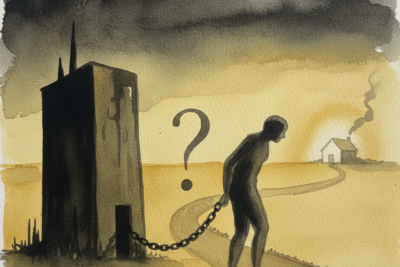
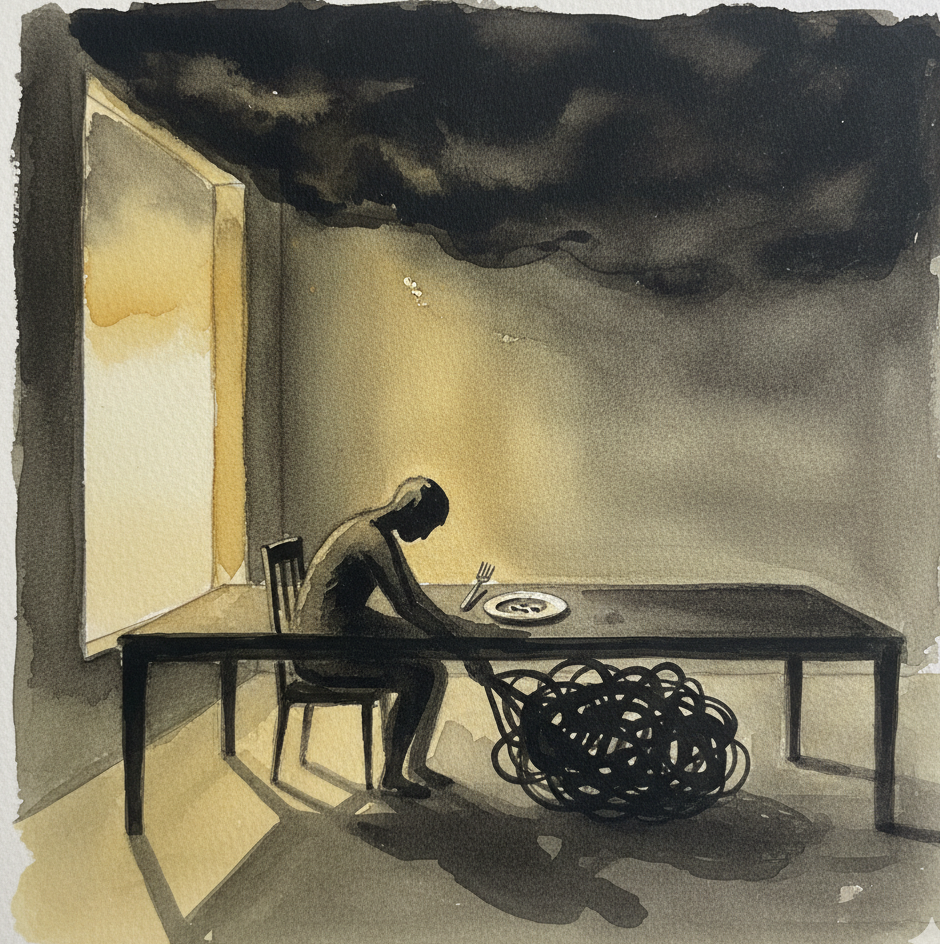
Around 4 pm on Sunday, something shifts. The light changes, the week appears on the horizon, and a weight settles in. You know the feeling. What you may not know is what it's actually telling you.
Sunday dread meaning is the question most people search when the feeling has been going on long enough that they suspect it's not just nerves. They're right to suspect that.
Sunday dread has two very different forms — and they have completely different causes, completely different durations, and completely different solutions. Every article you've read so far treats them as the same thing. This one doesn't.
Table of contents
- What Is Sunday Dread? The Basic Definition
- Why Does the Meaning of Sunday Dread Matter So Much?
- What Are the Two Types of Sunday Dread — and Which One Is Yours?
- What Does Chronic Sunday Dread Mean for Your Career?
- When Does Sunday Dread Become a Serious Signal?
- How Does Ikigai Help You Read the Sunday Dread Signal?
- What Should You Actually Do If Your Sunday Dread Won't Stop?
- The Sunday Dread Is Not the Problem. It's the Message.
- Frequently Asked Questions
What Is Sunday Dread? The Basic Definition
Sunday dread — also called the Sunday Scaries, Sunday blues, or Sunday syndrome — is a form of anticipatory anxiety that appears at the end of the weekend as the working week approaches. It's a widely documented, broadly experienced phenomenon.
80%
of professionals report experiencing Sunday dread, according to a survey of 3,000 U.S. workers cited by LinkedIn. A separate survey by Headspace found 75% of workers experience pre-week anxiety severe enough to disrupt Sunday evening. This is not a fringe experience — it is the baseline condition for most working adults.
The clinical name is anticipatory anxiety: your brain predicting a negative experience and generating a stress response before that experience has actually started. Your nervous system can't tell the difference between an imagined threat and a real one. So the Monday morning meeting you're dreading produces a genuine physical response on Sunday afternoon.
That's the textbook definition. It's accurate. And it's incomplete — because it describes how Sunday dread works neurologically without addressing what it's pointing at.
Why Does the Meaning of Sunday Dread Matter So Much?
Because the meaning determines the solution. And most people are solving the wrong problem.
If Sunday dread is a manageable anxiety response to a specific stressor — a big presentation, a difficult conversation, an overloaded week — then mindfulness techniques, planning rituals, and coping strategies are genuinely useful. They reduce the anticipatory load. They work.
But if Sunday dread is a chronic, recurring signal of misalignment between who you are and what you spend 40 hours a week doing — meditation won't fix it. Not because meditation is useless, but because you're treating a fracture with a painkiller. The pain lessens temporarily. The fracture remains.
"I tried everything — the Sunday planning, the gratitude journal, the 'special Monday treat.' Some Sundays were better. But the dread always came back. I eventually realised I wasn't anxious about the week. I was grieving it before it started."
— Selin, 33, marketing director, now in a career redesign process
What Selin was describing is the second form of Sunday dread. Not anticipatory anxiety about a stressor. Something older and quieter: the body registering, week after week, that the life ahead of it doesn't fit.
What Are the Two Types of Sunday Dread — and Which One Is Yours?
This is the distinction the internet has mostly missed. Here it is plainly.
| Feature | Type 1: Anticipatory Anxiety | Type 2: Misalignment Signal |
|---|---|---|
| Trigger | A specific stressor — meeting, deadline, conflict | The week itself. No specific trigger needed. |
| Duration | Comes and goes. Lifts when the stressor passes. | Chronic. Present every week, even after good ones. |
| After a relaxing weekend | Often better — the weekend helped | Often the same or worse — the contrast sharpens the feeling |
| Coping tips help? | Yes — meaningfully | Temporarily only |
| What it's pointing at | A specific situation that needs managing | A structural gap between who you are and what you do |
| Correct response | Anxiety management, planning, boundaries | Career diagnosis and design |
Ask yourself honestly: does the Sunday dread lift when a particularly hard week is over? Or does it return the following Sunday regardless of what the week holds?
If it returns regardless — if it's been showing up every Sunday for six months, a year, longer — you are dealing with Type 2. And that changes everything about what you should do next.
What Does Chronic Sunday Dread Mean for Your Career?
Type 2 Sunday dread is not a mental health disorder. It's a navigation signal. Your nervous system has a very limited vocabulary — it communicates largely through physical sensations. The dread that settles in on Sunday afternoons is its way of communicating a mismatch it has registered but that you may not have named yet.
There are four mismatches it's usually pointing at:
🧠
Strengths Mismatch
Your work rarely uses the abilities that are most natural and energising to you. You're competent but not engaged.
⚖️
Values Conflict
What you do daily contradicts something you believe is important. Small compromises stacked into a chronic tension.
🌫️
Meaning Absence
You can't trace a line between your daily tasks and anything that matters to you. Tasks without direction feel hollow.
🪞
Identity Drift
The role changed — or you did — and neither adjusted. The Sunday dread is the distance between who you were and who the job expects you to be.
You may recognise one of these immediately. More commonly, it's a compound of two or three — which is why the feeling is hard to articulate. It's not one specific problem. It's a structural misfit that's been accumulating quietly.
"I couldn't point to anything wrong. Good salary, okay team, manageable hours. But every Sunday that weight came back. It took me a long time to understand that the dread wasn't about the week — it was about who I was becoming in that job."
— Tobias, 41, senior product manager, now working in sustainability
When Does Sunday Dread Become a Serious Signal?
Not all Sunday dread warrants immediate career action. But some patterns indicate that the signal has been running long enough that inaction is itself a cost.
It starts earlier in the day — or earlier in the week
Classic Sunday dread arrives Sunday evening. When it starts appearing on Sunday morning, Saturday night, or even Friday afternoon, the anticipatory window is expanding — which usually means the underlying source has grown. Your nervous system is trying harder to get your attention.
It bleeds into the week itself
When the dread doesn't lift by Monday morning — when it continues through Tuesday and Wednesday — you're no longer dealing with anticipatory anxiety. You're dealing with chronic occupational dissatisfaction. That's a different category, with different health implications. Harvard Business Review's burnout research consistently links this pattern to physical health deterioration over 12–24 month timescales.
Good weekends make it worse, not better
This is the counterintuitive marker of Type 2. A genuinely good Saturday — hiking, friends, something alive — makes Sunday dread sharper, not softer. The contrast between who you are on your own time and who you become at work becomes impossible to ignore. If your best weekends produce your worst Sunday evenings, the dread is telling you exactly how wide the gap is.
You find yourself calculating years, not weeks
When the thought shifts from "I have a hard week ahead" to "I have 23 years of this ahead," the dread has moved from situational to existential. That's Type 2 at full volume.
How Does Ikigai Help You Read the Sunday Dread Signal?
If Sunday dread is a signal, the question is: what exactly is it signalling? That's not a question you can answer with more meditation. It requires a structured map.
The ikigai framework — a Japanese concept meaning "reason for being" — is built precisely for this mapping. It doesn't ask "what job should I have?" It asks four more specific questions:
- 1. What are you genuinely good at? — not just credentialed in, but energised by
- 2. What do you love doing? — when engagement is natural, not forced
- 3. What does the world actually need? — where real value meets real demand
- 4. What can you be paid for? — tested market viability, not just aspiration
The Sunday dread almost always lives in the gap between what you do and what sits at the intersection of those four questions. Most careers land in one or two of those circles — competent and paid — while ignoring the other two. The body keeps score of the gap. Sunday is when it files its weekly report.
The further your daily work sits from the centre, the louder the Sunday signal becomes.
Ikigai is not a cure for Sunday dread. It's a map that helps you understand what the dread is pointing at — specifically enough that you can do something about it.
What Should You Actually Do If Your Sunday Dread Won't Stop?
Two parallel tracks. They don't conflict — you can run them at the same time.
Track 1: Manage the symptom while you run the diagnosis
Coping strategies are useful even for Type 2 dread — not as a solution, but as a way to preserve functioning while you do the real work. A Sunday planning ritual reduces cognitive load. Disconnecting from work email protects the weekend. Exercise releases cortisol. These are legitimate short-term tools.
The error is using them as a permanent strategy for a structural problem. Manage the symptom and investigate the cause. Not instead of.
Track 2: Run the career diagnosis
Name which of the four misalignment types applies to you. Not abstractly — specifically. Which of your core strengths goes unused most weeks? What value do you believe in that your work contradicts? What outcome would make Monday feel different?
These questions don't have quick answers. But they have real answers. And the people who resolve chronic Sunday dread — not manage it, resolve it — almost always did so by answering them honestly before making any external change.
The Sunday Dread Is Not the Problem. It's the Message.
Most people spend years trying to make Sunday dread more tolerable — better planning, better coping, better weekends. That works when the dread is situational. When it's structural, those strategies are just better insulation on a house that needs different foundations.
The Sunday dread meaning, at its deepest, is this: your system has noticed a gap between who you are and how you spend most of your waking hours. It reports this gap every week, without fail, at the same time. The dread is not a malfunction. It's a fidelity to the truth about your situation that your conscious mind is still negotiating.
The question worth sitting with isn't "how do I stop feeling this on Sundays?" It's "what would have to be true about my work for this feeling to not arise?" Start there — and the Sunday after you find that answer will feel different.
Frequently Asked Questions
What is the meaning of Sunday dread?
Sunday dread — also called the Sunday Scaries or Sunday blues — is anticipatory anxiety about the working week ahead. Neurologically, it's a stress response triggered by imagined future stressors. But it has two forms: a manageable anxiety reaction to a specific stressor, and a chronic misalignment signal pointing at a structural gap between who you are and what your work asks of you. The meaning depends entirely on which form you're experiencing.
Is it normal to feel dread every Sunday?
Statistically common — surveys put it at 75–80% of working adults. But "normal" doesn't mean it should be permanent. Occasional Sunday dread tied to a specific stressor is a normal anxiety response. Chronic, recurring Sunday dread that appears every week regardless of what the week holds is a signal worth investigating — not a baseline condition to be managed indefinitely with coping strategies.
Why does Sunday dread feel worse after a good weekend?
This is a reliable marker of Type 2 — misalignment dread rather than situational anxiety. A genuinely fulfilling weekend sharpens the contrast between who you are when you're free and who the job expects you to be. The better Saturday was, the more clearly Sunday reveals the gap. If your best weekends produce your worst Sunday evenings, the dread is measuring the distance between your life and your work identity.
Can Sunday dread be a sign it's time to change careers?
It can be — but the dread alone isn't enough information to make that call. First, identify what type of dread it is. Then identify which misalignment is driving it: strengths gap, values conflict, meaning absence, or identity drift. Some of these are fixable inside your current role. Others require a broader change. The signal is real; the specific response depends on what the signal is pointing at.
How does ikigai relate to Sunday dread?
Ikigai maps the intersection of four things: what you love, what you're good at, what the world needs, and what you can be paid for. Chronic Sunday dread is almost always a symptom of sitting far from that intersection — doing work that addresses only one or two of those dimensions while ignoring the others. Ikigai doesn't eliminate Sunday dread by itself; it provides the diagnostic map to understand what's missing and what aligned work could look like.
Should I Quit My Job? Answer These 5 Questions First

Career Anxiety Symptoms — And What They're Really Telling You

How to Stop Living for the Weekend — For Good

Work-Life Balance vs. Meaning: The Wrong Trade-Off

The "Is This It?" Feeling in Your Career — Explained

My Life Feels Empty — What That Feeling Is Pointing At
Leave a Reply
Related posts