
Work-Life Balance vs. Meaning
You're Solving the Wrong Problem
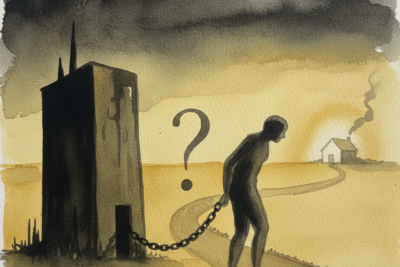
You got the hours back. The evenings are yours again. And yet something still feels off — like you've solved the scheduling problem but the original complaint was never really about the schedule.
The debate around work-life balance vs. meaning is rarely framed honestly. Most articles either treat balance as the destination or rebrand it as "harmony" or "integration" and call it a day. Nobody points out the more uncomfortable thing: that balance and meaning are solving two entirely different problems, and confusing them keeps a lot of people stuck.
This article draws that distinction clearly — what each one actually addresses, how to know which problem you actually have, and why ikigai is the only framework that tackles the meaning side directly rather than just rescheduling the emptiness.
Table of contents
- What Work-Life Balance Actually Solves — and What It Doesn't
- What Meaning Actually Is — and Why It's a Different Problem Entirely
- Work-Life Balance vs. Meaning: What Each One Actually Addresses
- Why Did We Conflate Balance and Meaning in the First Place?
- How Does Ikigai Address the Meaning Side of This Equation?
- Do You Have a Balance Problem, a Meaning Problem, or Both?
- Balance Is the Floor. Meaning Is the Goal.
- Frequently Asked Questions
What Work-Life Balance Actually Solves — and What It Doesn't
Work-life balance is a capacity problem. It asks: is work taking up too much space? Are the hours, the cognitive load, the emotional demands of the job overflowing into the time and energy you need for everything else?
That's a real problem. Overwork degrades health, relationships, decision quality, and basic enjoyment of life. Solving it — through boundaries, reduced hours, better workload management — genuinely helps.
But balance, by design, is a quantity answer to a quantity question. It doesn't ask anything about the quality of what's inside each side of the scale.
You can have eight-hour days, long weekends, a yoga routine, and a clean inbox — and still feel like something important is missing. Balance will not tell you what that thing is.
"I negotiated a four-day week. I started leaving at 5pm. I took a two-week holiday. And I came back from that holiday with the exact same feeling I'd had before I left. I'd fixed the hours. But I hadn't fixed the thing underneath the hours."
— Tom, 41, senior product manager, London
Tom's problem wasn't balance. His problem was that the work, at any volume, didn't connect to anything he cared about. He was doing the right quantity of the wrong thing. No scheduling fix resolves that.
What Meaning Actually Is — and Why It's a Different Problem Entirely
Meaning is not the same as happiness. This is one of the most important distinctions in the research on human motivation — and one of the most consistently ignored in career advice.
Happiness is about how you feel right now. Meaning is about whether what you're doing connects to something larger than the moment — your values, your impact, the people you serve, who you're becoming through the work.
9×
People with high purpose at work are nine times more likely to report high engagement and significantly less likely to report burnout, per research published in Harvard Business Review. In the same study, 9 out of 10 people reported they would trade a percentage of lifetime earnings for more meaningful work. Balance was not in the equation.
Psychologist Viktor Frankl, who developed logotherapy after surviving the concentration camps of World War II, observed that people could endure almost any how if they had a strong enough why. Meaning is not a luxury. It's what makes difficulty tolerable and effort feel worthwhile.
The distinction matters practically. If your work lacks meaning, you cannot solve that problem by working fewer hours. You just have more free time in which to notice the absence.
Work-Life Balance vs. Meaning: What Each One Actually Addresses
These are not competing goods. They are different diagnoses. Before you decide which one to pursue, you need to know which problem you actually have.
Work-Life Balance solves…
- Overwork and unsustainable hours
- Cognitive and emotional depletion
- Not enough time for family, health, rest
- Boundaries that keep collapsing
- Physical and mental burnout from volume
Meaning solves…
- Work that feels pointless regardless of hours
- Competence without engagement
- Success that feels hollow on arrival
- The Sunday dread even after a relaxing weekend
- Drift from who you actually are
Notice: the right column is not fixed by reducing hours. And the left column is not fixed by finding purpose. They are orthogonal problems. Applying the wrong solution to either one doesn't just fail — it delays the real fix by years.
The four combinations — which quadrant are you in?
✅
Balanced + Meaningful
The actual goal. Sustainable hours doing work that matters to you. Rare, but designable.
⚡
Imbalanced + Meaningful
Working too hard at work you love. Energising short-term; physically unsustainable long-term. Fix the volume, not the work.
😶
Balanced + Meaningless
Tom's quadrant. Good hours, hollow days. Balance is solved; meaning is the problem. The most underdiagnosed quadrant.
🔥
Imbalanced + Meaningless
Both problems active simultaneously. Common in high-pressure corporate roles. Both require attention, in sequence.
Most career advice is written for the bottom-left quadrant — overworked and miserable. If you're in the top-right — fine hours, empty work — the standard advice doesn't apply. And if you keep applying it, you'll feel worse, not better, because you'll keep solving a problem you don't have while the real one goes unexamined.
Why Did We Conflate Balance and Meaning in the First Place?
Because for a long time, they overlapped in practice. If you were working 70-hour weeks in a job you found meaningful, the most useful intervention was: work less, recover more, protect your personal life. Balance was the right prescription because the meaning side was already handled.
But the workforce changed. Gallup's research consistently shows that well over half of global workers are disengaged — doing the tasks without any sense of connection to the purpose behind them. In that environment, telling people to work less doesn't solve the underlying problem. It just distributes it more evenly across the week.
"I kept reading about work-life balance like it was the answer. I took the shorter hours, I set the boundaries, I took the holiday. But nobody told me that the problem wasn't the hours. The problem was that I'd spent ten years getting very good at something I didn't care about."
— Sofia, 44, communications director, Brussels
Sofia's story is common and almost never named in the balance literature. The balance framework has no vocabulary for "I've optimised the hours but the hours are full of the wrong things." It needs a different framework for that — one that operates at the level of what the work actually is, not just how much of it there is.
The real spectrum: from capacity problem to alignment problem
Too much work
Wrong work
Most people are somewhere in the middle — partial overwork and partial misalignment. The mistake is treating both as a scheduling issue. The right side of this spectrum requires a different tool entirely.
How Does Ikigai Address the Meaning Side of This Equation?
Ikigai — the Japanese concept of "reason for being" — is the only widely usable framework that addresses meaning as a design problem rather than a discovery problem.
The difference matters. Treating meaning as something you discover ("find your passion," "follow your calling") puts you in a passive position, waiting for clarity to arrive. Treating it as something you design means mapping the inputs systematically and identifying where they intersect.
Ikigai maps four questions simultaneously:
- 1. What are you genuinely good at?
- 2. What do you actually love doing?
- 3. What does your market — or the world — actually need?
- 4. What can you be paid for?
Balance manages the volume of work. Ikigai addresses whether the work is worth the volume.
Work that sits at the centre of that diagram — where all four circles overlap — doesn't need to be balanced against life. It is part of life. It generates energy rather than depleting it. That's not idealism. It's what the research on engagement and sustainable performance consistently shows.
Balance is still relevant — you can do meaningful work in unsustainable ways, and the physical reality of overwork is real regardless of meaning. But balance without meaning is a solved scheduling problem sitting on top of an unsolved identity problem.
Do You Have a Balance Problem, a Meaning Problem, or Both?
The fastest way to answer this is with two questions.
Question 1: If your hours were cut in half tomorrow, would you feel better about your work?
If yes — your primary problem is likely capacity. Balance interventions will help. Set boundaries, reduce load, protect recovery time. These will make a genuine difference.
If no — if you sense that the relief would be temporary, and the fundamental unease would still be there — then your problem is downstream of hours. It's about what the hours contain, not how many of them there are.
Question 2: When you imagine a version of your work that fully used your best skills and aligned with your values — does the thought of working longer at that feel different?
If yes — you have a meaning problem. The issue isn't work volume. It's work content.
Most people who sit with these two questions honestly find they have some of both. The key is sequencing: address the capacity problem first if it's severe enough to prevent clear thinking. Then address the meaning problem with a framework that's actually designed for it.
"I'd spent three years reading about work-life balance, setting better boundaries, going on more holidays. None of it changed how I felt on Monday morning. The day I started mapping my ikigai — actually writing down the four dimensions — I realised I'd been solving the wrong equation."
— Nadia, 37, strategy consultant, Toronto
Balance Is the Floor. Meaning Is the Goal.
Work-life balance is necessary. You cannot do good work — or have a good life — if work has colonised all of your time and energy. The boundaries are real. The rest matters. None of that is wrong.
But balance is a floor, not a destination. It creates the conditions for a good working life; it doesn't constitute one. The question that balance never asks — and cannot answer — is whether the work itself is worth doing. Whether it uses who you actually are. Whether it connects to anything beyond the paycheck and the job title.
That's the meaning question. And it needs its own framework, its own method, and a willingness to ask a harder question than "am I working too many hours?" What would it mean for your work to actually be worth the hours you give it?
Frequently Asked Questions
Is work-life balance more important than finding meaningful work?
They're not competing for the same slot. Work-life balance addresses overload — too much work taking space from the rest of your life. Meaning addresses misalignment — doing work that doesn't connect to who you are or what you value. If your hours are unsustainable, fix balance first. If your hours are fine but the work still feels hollow, balance is not your problem. The mistake is treating one as a substitute for the other.
Can meaningful work replace the need for work-life balance?
Not fully. Meaningful work makes long hours feel less depleting — it generates engagement rather than just consuming energy. But the physical reality of overwork is real regardless of meaning. Sleep debt accumulates, relationships suffer, health degrades. The ideal is meaningful work done at a sustainable pace. Meaning doesn't make recovery unnecessary; it makes the work worth recovering from.
Why do I feel empty even though I have good work-life balance?
Because balance solved the capacity problem but the meaning problem is still active. You've freed up time and energy — but the work they return to is still disconnected from your values, strengths, or sense of purpose. Feeling empty despite good hours is one of the clearest signals that meaning, not balance, is the actual gap. No further schedule optimisation will fix it. The work itself needs examining.
How does ikigai relate to work-life balance?
Ikigai operates on the meaning side of this equation. It maps four dimensions — what you love, what you're good at, what the world needs, what you can be paid for — and identifies where they intersect. Work at that intersection tends to require less recovery because it generates more engagement. Ikigai doesn't replace balance; it addresses the deeper question that balance never asks: is this work worth doing in the first place?
What's the difference between happiness and meaning at work?
Happiness is about how you feel in the moment — pleasure, comfort, ease. Meaning is about whether what you're doing connects to something larger than the moment: your values, your impact, who you're becoming through the work. Research consistently shows that meaningful work predicts long-term engagement and resilience far better than pleasant work does. You can have a comfortable, happy job and still feel that something important is missing. That missing thing is usually meaning.
Should I Quit My Job? Answer These 5 Questions First

Career Anxiety Symptoms — And What They're Really Telling You

How to Stop Living for the Weekend — For Good

The "Is This It?" Feeling in Your Career — Explained

My Life Feels Empty — What That Feeling Is Pointing At

How to Know If You're in the Wrong Career (Not Just a Bad Job)
Leave a Reply
Related posts